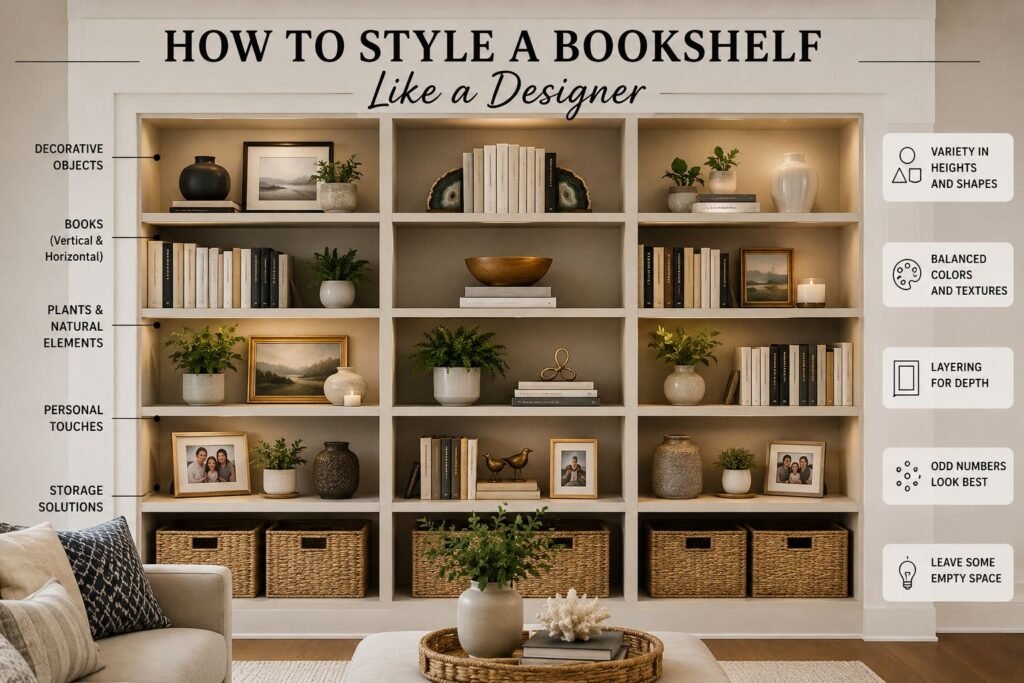

A bookshelf is more than just a place to store books. It can become one of the most beautiful features in your home when it is styled with care. Whether your bookshelf is in the living room, bedroom, home office, or hallway, a well-designed shelf can make your space feel warm, balanced, and welcoming.
If you have ever wondered how to style a bookshelf like a designer, you are not alone. Professional interior designers use a few simple tricks to make shelves look elegant without making them feel crowded. The good news is that you do not need expensive decorations or professional skills to achieve the same look.
In this guide, you will learn easy bookshelf styling ideas, common mistakes to avoid, and practical tips that anyone can follow.
Why Bookshelf Styling Matters
Many people simply place books on shelves and leave them there. While that works for storage, it does not always create an attractive room.
A thoughtfully styled bookshelf can:
- Make your room feel larger
- Show your personality
- Display your favorite books
- Add texture and color
- Keep your home organized
- Create a balanced interior design
A bookshelf often becomes a focal point, especially in living rooms and home offices.
Start by Emptying the Bookshelf
Before decorating, remove everything from the shelves. This gives you a fresh start and lets you see exactly what you own.
Separate your items into groups such as:
- Books
- Photo frames
- Plants
- Decorative objects
- Candles
- Storage baskets
- Artwork
- Keepsakes
Cleaning the shelves before restyling also helps your display look fresh.
Choose a Color Theme
One of the easiest designer secrets is using a consistent color palette. Your bookshelf should match the room instead of looking completely separate.
Popular color themes include:
- Neutral white and beige
- Black and wood tones
- Earthy greens and browns
- Soft pastels
- Navy and gold
- Modern black and white
You do not need every decoration to match perfectly. Simply keep the colors balanced.
Mix Vertical and Horizontal Book Stacks
A shelf filled with books standing straight up can look plain.
Instead, combine vertical books with horizontal stacks.
For example:
- Place standing books on one side.
- Add a stack of three books beside them.
- Put a candle or small vase on top of the horizontal stack.
This creates movement and visual interest.
Leave Empty Space
One of the biggest designer tricks is knowing when not to decorate.
Do not fill every inch of every shelf.
Leaving empty space allows each object to stand out.
Think of empty space as part of the design rather than wasted space.
Add Decorative Objects
Books should remain the main focus, but decorative accessories make shelves feel complete.
Some popular bookshelf decor ideas include:
- Ceramic vases
- Small sculptures
- Candles
- Decorative boxes
- Wooden beads
- Glass bowls
- Picture frames
- Clocks
Choose items in different heights and shapes.
Include Natural Elements
Nature instantly makes shelves feel more inviting.
Easy options include:
- Small indoor plants
- Succulents
- Fresh flowers
- Dried pampas grass
- Wooden bowls
- Stone decorations
Even one small green plant can brighten an entire bookshelf.
Use Personal Items
A designer bookshelf should tell your story.
Add meaningful objects like:
- Family photos
- Travel souvenirs
- Awards
- Handmade crafts
- Vintage finds
- Favorite collectibles
These personal touches make the shelf unique.
Layer Objects
Professional designers rarely place everything in one straight line.
Instead, they layer items.
For example:
- Lean artwork against the wall.
- Place a vase slightly in front.
- Add a small decorative object beside it.
Layering creates depth without making the shelf look messy.
Decorate with Odd Numbers
Interior designers often arrange objects in groups of three or five.
For example:
Group of three:
- Small plant
- Candle
- Decorative bowl
This arrangement feels more natural than placing two identical items together.
Vary Heights
Every shelf should have objects with different heights.
Mix:
- Tall vases
- Medium books
- Small candles
Different heights help keep the eye moving across the shelf.
Arrange Books by Style
There are several ways to organize books.
By Color
Arrange books in rainbow order or similar colors.
This creates a bold visual effect.
By Size
Place larger books together and smaller books nearby.
This creates a clean appearance.
By Genre
Organize books by category such as:
- Fiction
- History
- Cooking
- Business
- Art
This makes books easier to find.
By Author
If you own many books, alphabetical organization keeps everything neat.
Add Artwork
Small artwork adds personality without taking much space.
Ideas include:
- Framed prints
- Canvas art
- Black-and-white photography
- Abstract paintings
- Family portraits
Instead of hanging every piece, lean some artwork against the back of the shelf.
Use Decorative Storage Boxes
Storage boxes hide clutter while looking stylish.
Use them to store:
- Chargers
- Cables
- Pens
- Important papers
- Small electronics
Choose boxes that match your room’s colors.
Incorporate Different Textures
Texture makes shelves feel interesting.
Combine materials like:
| Material | Adds |
|---|---|
| Wood | Warmth |
| Glass | Brightness |
| Metal | Modern style |
| Ceramic | Soft elegance |
| Stone | Natural beauty |
| Fabric | Comfort |
Mixing textures prevents shelves from looking flat.
Balance Every Shelf
Avoid placing all heavy items on one side.
Instead:
- Spread books evenly.
- Place larger decorations across different shelves.
- Alternate colors throughout the bookshelf.
Balanced shelves feel calm and organized.
Style Each Shelf Differently
Every shelf does not need the same layout.
For example:
Top Shelf
- Artwork
- Small plants
- Decorative vase
Middle Shelf
- Books
- Photo frame
- Candle
Bottom Shelf
- Storage baskets
- Large books
- Decorative box
This creates variety while keeping the overall design cohesive.
Add Lighting
Lighting makes bookshelves feel luxurious.
Options include:
- LED strip lights
- Battery-operated puck lights
- Picture lights
- Warm fairy lights
Warm lighting creates a cozy atmosphere during the evening.
Rotate Decorations Seasonally
You do not need to keep the same decorations all year.
Try changing your bookshelf with the seasons.
Spring
- Fresh flowers
- Green plants
Summer
- Coastal decor
- Light colors
Autumn
- Pumpkins
- Warm candles
Winter
- Pine branches
- Holiday decorations
This keeps your home feeling fresh.
Common Bookshelf Styling Mistakes
Avoid these common errors:
- Overcrowding every shelf
- Using decorations that are all the same size
- Ignoring color balance
- Keeping dusty books
- Filling shelves without purpose
- Buying decorations only to fill empty spaces
Remember that sometimes less truly looks better.
Bookshelf Styling Ideas for Different Rooms
Living Room
Include:
- Coffee table books
- Plants
- Family photos
- Sculptures
Keep the display welcoming.
Home Office
Focus on:
- Business books
- Awards
- Office supplies
- Motivational artwork
Keep it neat and professional.
Bedroom
Choose calming decor such as:
- Candles
- Novels
- Small plants
- Framed photos
Avoid overcrowding.
Children’s Room
Use:
- Colorful books
- Toys
- Educational decorations
- Storage bins
Keep lower shelves easy for children to reach.
Budget-Friendly Bookshelf Styling Tips
Beautiful shelves do not require expensive decor.
Affordable ideas include:
- Shop at thrift stores.
- Use items you already own.
- Display souvenirs from trips.
- Paint old picture frames.
- Add inexpensive indoor plants.
- Repurpose glass jars as vases.
- Stack books creatively.
Often, rearranging existing items is enough to transform a bookshelf.
Designer Formula for Styling a Bookshelf
A simple formula many designers follow is:
- Start with books.
- Add plants.
- Include artwork.
- Mix decorative objects.
- Leave empty space.
- Balance colors.
- Step back and adjust.
Take a photo of your bookshelf after styling it. Looking at a picture often helps you notice areas that need improvement.
Final Thoughts
Learning how to style a bookshelf like a designer is easier than many people think. You do not need expensive decorations or professional experience. By mixing books with decorative objects, using natural elements, balancing colors, adding texture, and leaving some open space, you can create a bookshelf that looks elegant and feels personal.
The best bookshelf is one that reflects your style while remaining functional. Start with the items you already own, experiment with different layouts, and make small adjustments until the shelves feel balanced. With a little creativity and patience, your bookshelf can become one of the most eye-catching features in your home.
Frequently Asked Questions
How do you style a bookshelf like a designer?
Start with books as the main feature, then add decorative objects, plants, artwork, and personal items. Mix vertical and horizontal book stacks, vary object heights, and leave some empty space for a balanced look.
How many decorations should be on a bookshelf?
There is no fixed number. A good rule is to avoid overcrowding. Each shelf should have a mix of books, a few decorative pieces, and some open space.
Should books be arranged by color?
Arranging books by color can create a stylish display, but it is a personal choice. You can also organize books by genre, size, or author based on your preference.
What are the best decorations for a bookshelf?
Popular options include small plants, candles, framed photos, ceramic vases, sculptures, decorative boxes, and travel souvenirs. Choose items that match your room’s style.
How can I decorate a bookshelf on a budget?
Use items you already own, visit thrift stores, repurpose old containers as vases, add affordable indoor plants, and rearrange your books creatively. Small changes can make a big difference.
What should not go on a bookshelf?
Avoid clutter, oversized decorations that block books, too many small items, broken accessories, or objects that do not fit your room’s style. A clean and balanced display usually looks best.